

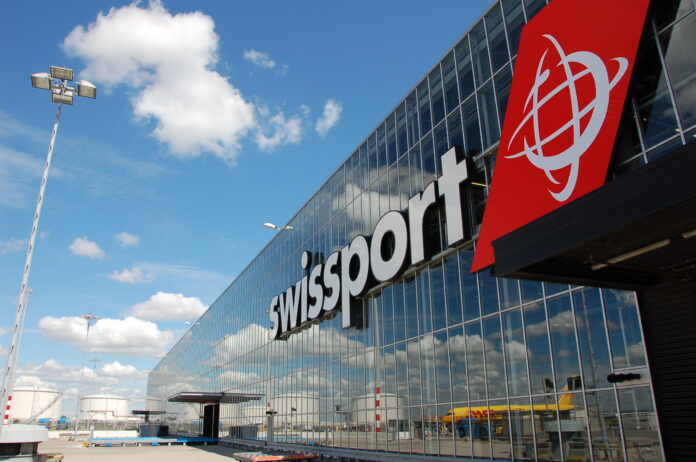
The world’s largest airport ground services and air cargo business, Swissport, has entered the debate surrounding the rising frequency of international flight disruptions due to ongoing air traffic control (ATC) failures – calling for a new European-wide system to avoid issues arising in certain countries affecting continent-wide flights.
Hundreds of flights and thousands of passengers are being affected by delayed, diverted or cancelled flights on an annual basis due to ATC issues mainly in France, Italy, Iberia and the UK. These have a knock-on effect to flights not only going to and from these countries but also flying over them, creating havoc for airlines and passengers.
Ryanair has been a vocal critic of European ATC services, calling for severe action in both the UK and at EU level.
Now, Swissport has entered the fray, with its CEO Warwick Brady calling for the implementation of the Single European Sky (SES) initiative, which was first proposed in 1999, which would unify all of the separate national European ATC services under one umbrella body.

Talking to The Times newspaper, Mr Brady said: “We’ve seen air traffic control-related delays in Europe jump from 11.6% in the first half of this year to 18.9% in July. That’s seven times higher than in the US. Until we modernise air traffic control, disruptions will only grow.”
France is seen as the main offender when it comes to European ATC disruption, but there are over 40 national ATC bodies across Europe, each with the ability to disrupt European-wide air travel due to any number of staffing issues.
French ATC workers are due, again, to strike over working conditions next week. The last such strike action, in France, in July saw 272 workers go on strike for 48 hours and more than 1 million air passengers across Europe hit with flight chaos.
Putting a UK infrastructure perspective on things, Mr Brady told The Times: “In the UK, political focus is largely on airport expansion, hence the debate about Heathrow’s third runway. But, without a complete overhaul of UK airspace, any additional capacity will be ineffective and billions could be wasted.”