

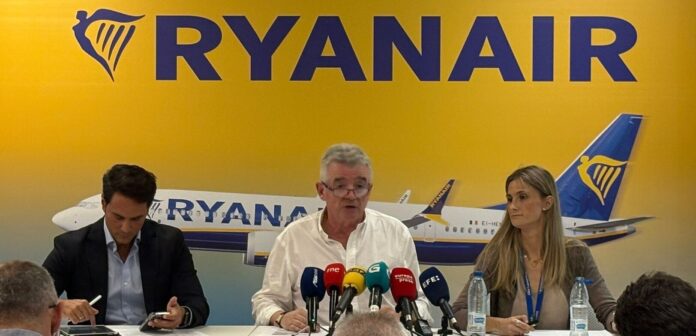
Ryanair has announced further widespread capacity and operational cuts across Europe due to what it sees as overly high airport charges in certain countries.
The airline has announced a 1.2 million seat reduction in its summer 2026 regional Spain schedule and the stopping of all flights to and from Asturias Airport in the north-west of the country due to what it calls uncompetitive airport fees by airport operator Aena.
Ryanair said: “These regrettable cuts follow Ryanair’s 1m seat cuts to Regional Spain for Winter 2025, and are a direct result of the Spanish Govt’s failure to stop Aena’s monopoly fee increases, particularly at under-used Regional airports, and its failure to reverse Minister Bustinduy’s illegal bag fines, despite promising to do so.
“While Minister Bustinduy continues to illegally interfere in the pricing of low-fare airlines, in breach of EU law, he refuses to take any action against overcharging by a number of Spanish OTAs who continue to overcharge and harm unsuspecting Spanish consumers.
“The Spanish Government is the majority shareholder in the Aena Airport Monopoly and has appointed an ex-politician – Maurici Lucena – to run it. Despite this control, the Aena Monopoly continues to raise fees at Spain Regional Airports, making them uncompetitive and harming growth. Aena’s monopoly approach to pricing is that small underused Regional airports should charge similar rates as busy main airports like Madrid, Barcelona, Palma and Malaga.”
Ryanair Group CEO Michael O’Leary, said: “AENA and its major shareholder, the Spanish Government, continue to harm regional traffic growth, tourism and jobs in Spain through high airport fees and unjustified price increases. AENA should be lowering airport fees at underused Regional airports, but instead they plan to increase them by 7%, the highest fee increase for over a decade.
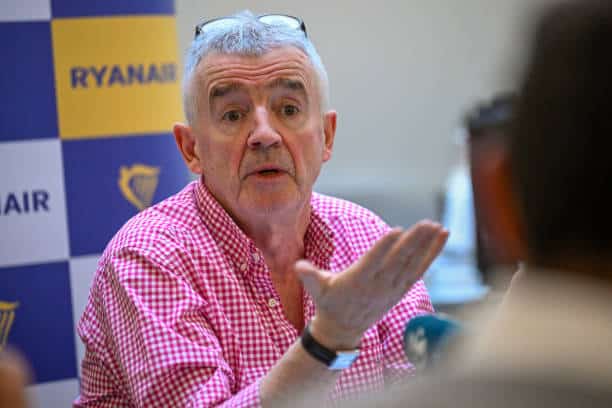
“The Spanish Government has failed to stimulate Regional tourism and jobs, as it continues to protect the Aena Monopoly’s high fee operations. We regret that these fee increases make Regional Spanish airports uncompetitive, and this is why Ryanair is switching 1.2 million more seats away from Regional airports in Spain in S2026, to some of Spain’s bigger airports, but mainly to lower-cost competitor airports in Italy, Morocco, Croatia, Sweden, and Hungary.
Meanwhile, Ryanair has cut its winter 2025 schedule to Estonia’s capital Tallinn by a whopping 40% due to a 70% increase in local airport charges for airlines.
This move will result in the loss of 110,000 seats and the ending of five international routes from Estonia to Vienna, Venice-Treviso, Rome-Ciampino, Paphos and Milan-Bergamo.
The Tallinn cut is on top of the already 45% capacity cut Ryanair announced to its summer 2025 schedule, which resulted in the cancellation of 230,000 seats.
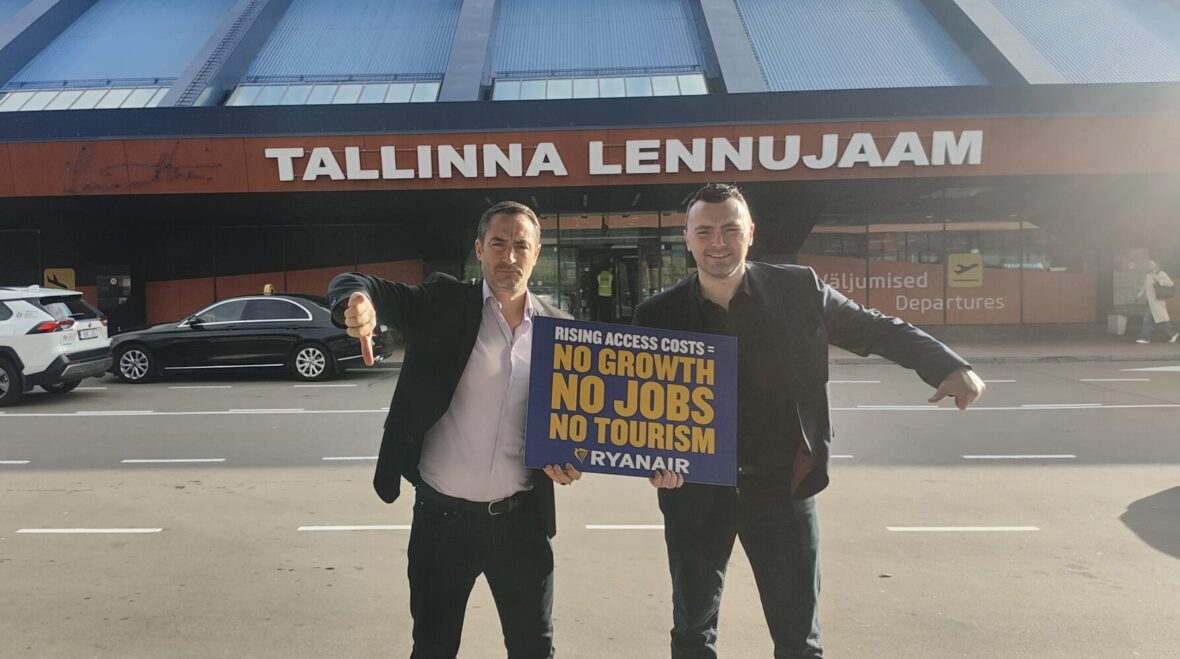
Ryanair’s CCO, Jason McGuinness, said: “Tallinn Airport’s illogical decision to increase airport charges by 70% at a time when other European airports and countries are reducing charges to stimulate investment and travel has forced Ryanair to reduce its Tallinn Winter’25 capacity by 40%, resulting in the loss of 110,000 seats and 5 international routes. When combined with this Summer’s cuts Tallinn hast lost over 340,000 Ryanair seats across the full year. These cuts will severely damage traffic, jobs, and tourism growth in Estonia.
“While competitor countries such as Albania, Hungary, Italy, Poland, and Sweden are reducing airport fees to stimulate growth – to which Ryanair has responded with more routes, more seats, and more jobs – Tallinn is heading in the opposite direction leading to less direct flights, less low-fare seats, and less inbound tourism.
“Ryanair again calls on the Estonian Govt and Tallinn Airport to reverse the 70% charge increase and follow the lead of competitor countries by adopting lower access costs. If this happens, Ryanair stands ready to deliver significant growth in Tallinn, doubling capacity to 1.4 million seats per annum, boosting tourism and supporting Estonia’s economic recovery. If the Government fails to seize this opportunity, fares for Estonian passengers will inevitably rise and Ryanair will be forced to keep reallocating capacity to more competitive growth orientated EU markets.”

Ryanair is also calling on Lithuania’s Government to reduce airport access costs in order to support growth – saying Ryanair will deliver zero growth in Lithuania this winter due to rising airport costs.
Mr McGuinness, said: “It’s disappointing that Ryanair will deliver zero growth in Lithuania for Winter ’25, which is entirely the result of the rising access costs at Lithuanian airports – with Lithuanian Airports choosing to raise charges at Vilnius by 30% and Palanga by 7%. These increases, at a time when other European countries are cutting costs to drive growth, are leaving Lithuania hopelessly uncompetitive, slowing its recovery and resulting in reduced connectivity, forcing the reallocation of capacity to faster-growing, lower-cost markets across Europe.
“The opening of the expanded Vilnius terminal has doubled available capacity at the Airport, providing a clear opportunity to boost connectivity, tourism, and jobs – but rising access costs are holding Vilnius back, preventing the airport and Lithuania from turning this potential into tangible growth and enhanced connectivity.
“While countries like Albania, Hungary, Poland, Sweden, and Italy are reducing access costs to stimulate traffic growth, regrettably Lithuania is going in the opposite direction. Ryanair urges the Lithuanian Govt. to reduce access costs and become far more competitive to unlock Ryanair’s ambitious growth plan – doubling Vilnius traffic from 1.4m to 2.8m seats p.a., creating jobs, and boosting tourism and economic growth. Without urgent action, fares for Lithuanian passengers will rise and Ryanair will continue to allocate aircraft and capacity to more competitive growth orientated markets elsewhere in Europe.”