

As the summer holidays approach and families from across Ireland prepare to take trips abroad, AirHelp, the leading travel tech company supporting passengers with flight disruptions, has analysed recent summer tourism trends to uncover which routes and airports are most likely to offer a disruption-free experience for Irish holidaymakers.
Key findings include:
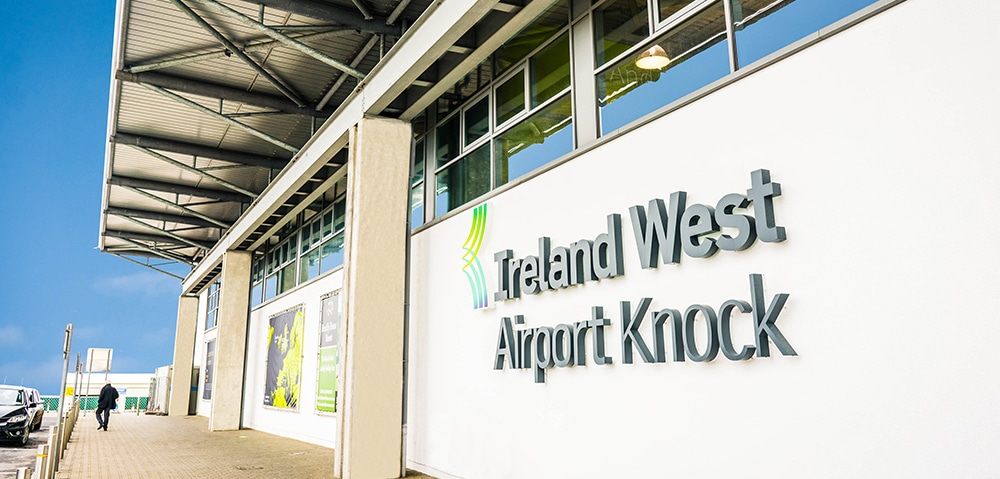
- Ireland West Airport was the most disrupted airport in Ireland, with 44% of passengers affected
- Across Ireland, flight punctuality between July and August 2024 was just 70%
- 61,000 passengers departing from Ireland were eligible for compensation under EC 261 regulation
- Travel to the Nordic regions was less likely to be disrupted, even during peak summer travel
AirHelp analysed flights from across July and August of 2024 to reveal which airports and destinations achieved the most consistent service across the busiest two months of the year. During this period, more than 26,500 flights departed from Irish airports, carrying over 4 million passengers, with 29% suffering from a disruption.
The worst affected airport was Ireland West Airport Knock, which saw 44% of its passengers disrupted across July and August of 2024. Dublin Airport performed better, with 70% of its passengers departing on time, but saw almost 53,000 passengers left eligible for compensation under the EC 261 regulation. Including cancellations, more than 61,000 Irish passengers were eligible for compensation across the summer travel season.

Under EC 261, the European Union’s air passenger rights regulation, passengers are entitled to financial compensation if they experience delays of more than three hours, cancellations less than 14 days before departure, or are denied boarding due to overbooking – provided the airline is at fault.
However, these rules are currently under dispute, following a European Union vote last week that proposed increasing the threshold from three hours to four or six hours, and reducing the compensation available to passengers. The changes would heavily reduce the protection available to passengers, with 60% fewer travellers being eligible for compensation, and the remaining percentage receiving a reduced financial amount.
For passengers trying to find air travel routes that minimise disruption, destinations in the Nordic region seem likely to remain more issue free even during the busiest months, with flights from Irish airports to Denmark and Iceland operating without disruption 86% and 84% of the time.
AirHelp’s data also highlights several highly punctual European routes departing from Ireland. Leading the list is routes from Cork to Amsterdam, with 95% of flights arriving on time. This is followed by Cork to Faro, with an 87% on-time rate, and Dublin to Brussels, where 86% of flights were punctual.
Conversely, routes to key European holiday destinations such as Turkey are more likely to see disruption during the summer months. Flights from Ireland to Adnan Menderes Airport had the highest disruption rate at 57%. This was followed by Dublin to Split, where 48% were disrupted.
Flights to Italy also suffered severe disruptions, with 34% of all travellers to the country being disrupted on their journey. Passengers travelling on routes from Dublin Airport to Bergamo Orio Al Serio Airport Airport and Dublin Airport to Rome Fiumicino Leonardo da Vinci Airport were particularly affected, with disruption rates of 47% and 31% during the summer in 2024.

Tomasz Pawliszyn, CEO of AirHelp, commented: “AirHelp has one of the most reliable and accurate collections of flight data in the world. This helps us provide holidaymakers with a calculated analysis of which airports and destinations performed well during the summer months of 2024. With flight disruptions continuing to rise in 2025, there is some concern that summer travel will once again worsen, and knowing which airports and destinations are likely to remain disruption-free, gives passengers the best chance of enjoying a smoother air travel experience.”