
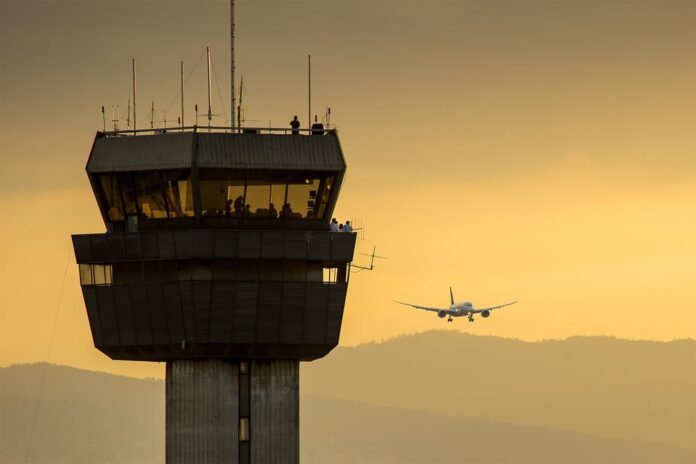
A nationwide strike by French air traffic controllers has caused widespread disruption across Europe, with significant impact on flights in and out of Dublin Airport. As of 7am today, 14 flights have been cancelled by airlines, following 20 cancellations yesterday. Passengers can expect further delays to flights.
The French civil aviation authority (DGAC) instructed airlines to cancel 40% of services at Paris’s three main airports due to the strike, which air traffic control unions attribute to staffing shortages and outdated infrastructure. Up to 50% of flights at other airports across southern France have also been affected, according to the DGAC.
Airlines for Europe (A4E), a leading industry lobby group, reported that approximately 1,500 flights have been cancelled over the course of the two-day strike, disrupting travel plans for an estimated 300,000 passengers. Further delays and operational disruptions are anticipated.
Ryanair CEO Michael O’Leary, speaking on RTÉ’s Today with Claire Byrne, described the action as a “recreational strike” and criticised the lack of EU response. He emphasised the impact on overflights, aircraft passing through French airspace without landing, arguing that other countries, such as Spain, Italy, and Greece, protect these flights during industrial actions.
O’Leary stated that Ryanair, along with other European carriers, has repeatedly called on European Commission President Ursula von der Leyen to legislate protection for overflights, particularly during peak travel seasons.
Kenny Jacobs, CEO of daa—the operator of Dublin and Cork Airports—also condemned the industrial action on RTÉ’s Morning Ireland. He described the disruption as “an annual ransom” imposed by a small group of air traffic controllers, asserting that the strike disproportionately affects holiday travel for hundreds of thousands of European passengers.
Jacobs called on the EU to implement a unified aviation policy that would shield overflights during national strikes. He reiterated Ryanair’s call, backed by over one million signatories, for legislation supporting a “Single European Sky”.
In terms of airport traffic, Jacobs reported a 4% year-on-year increase in Dublin Airport’s Q2 passenger numbers, with European traffic up 6% and American visitors up 4% for June. Cork Airport saw a significant 15% rise.
Jacobs also addressed the ongoing issue of the Dublin Airport passenger cap, noting that daa has submitted applications to Fingal County Council to raise the cap to 36 million or 40 million passengers. He expressed optimism that the Irish Government will resolve the issue by autumn, citing recent uncertainty as a factor in TUI’s decision to reduce aircraft capacity in Dublin.
Jacobs concluded that expanding airport infrastructure is vital to accommodate future growth and maintain Ireland’s connectivity to global tourism and business networks.
Passengers due to fly to or over mainland Europe today are advised to check directly with their airline for latest updates on the status of their flight.