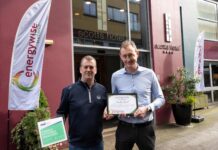

KLM and KLM Cityhopper won several awards at the annual Aviation Challenge Awards ceremony in Copenhagen. This challenge encourages airlines worldwide to conduct their regular operations with as little impact on the environment as possible, while testing innovative solutions that contribute to making aviation more sustainable. Twenty-two airlines participated this year.
The flight to Nairobi with which KLM participated in The Aviation Challenge achieved the lowest CO₂ emissions ever, at 35g CO₂/RTK. This was achieved by flying entirely on sustainable aviation fuel/SAF (through the mass balance method) and making a number of operational adjustments. This earned KLM a Special Recognition award. KLM also received a Special Recognition award for sharing knowledge with Kenya Airways.

In addition, KLM received an award for the Best Showcase Flight with the video Intern On A Mission, for the inspiring image KLM gave of the flight to Rome with an Airbus 321N.
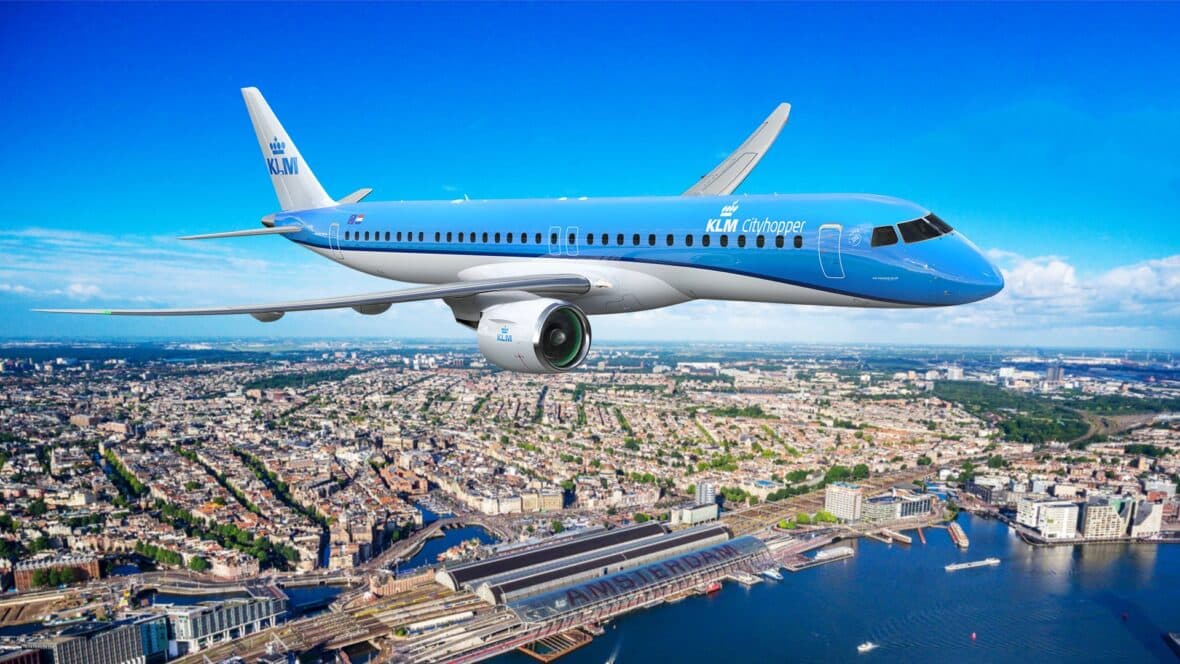
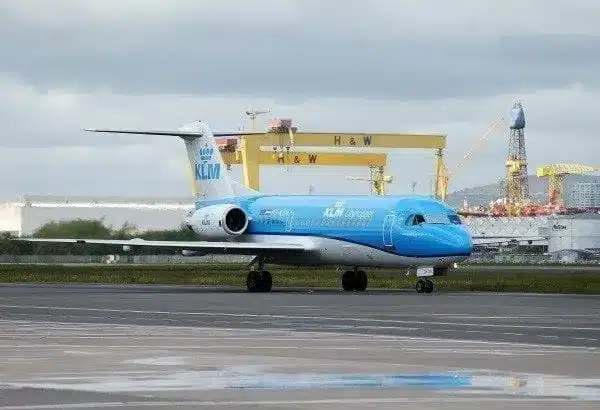
Finally, KLM Cityhopper (KLC) won the prestigious Pioneer of the Year award for its 100% SAF ticket project, which ran in 2025 on the Amsterdam – London City Airport and Amsterdam – Hamburg routes. KLC temporarily increased the SAF percentage to 100 percent on the two test routes. The additional SAF contribution went entirely towards the purchase of SAF. In this way, KLC investigated passengers’ willingness to pay extra for SAF if it is included in the ticket price as standard.
About The Aviation Challenge
More than eighty flights were carried out between September 26 and October 26 as part of The Aviation Challenge. During these flights, airlines tested operational improvements and innovative solutions that contribute to reducing CO2 emissions from aviation. Examples include route optimisation, innovative maintenance measures, weight savings, and the use of SAF.
On average, these flights achieved 13.5% lower CO2 emissions than the regular operations of the participating airlines and were 12% below the sector average.
The Dutch airline said: “KLM recognises its impact on the environment and climate and understands that there are limits to what our planet can withstand. Action is needed to continue operating within these limits. By testing various innovations during flight operations and on board, KLM is assessing their benefits with the aim of scaling them up and implementing them as standard.”