
KLM has backed calls for the Dutch Government to invest in a national Sustainable Aviation Fuel (SAF) fund.
In doing so, the Dutch flag carrier is supporting the so-called Wennink Report, a wide-reaching support, by Dutch businessman Peter Wennink, examining how the Netherlands should and could invest in innovative technologies to support its future economic growth.
Such a fund would enable the Netherlands to accelerate the production of alternative aviation fuels and make them more affordable, thereby accelerating the sector’s sustainability. Real progress can only be achieved if government and industry work together and if the government takes a more active role. KLM urges policymakers to adopt this recommendation, the report said.
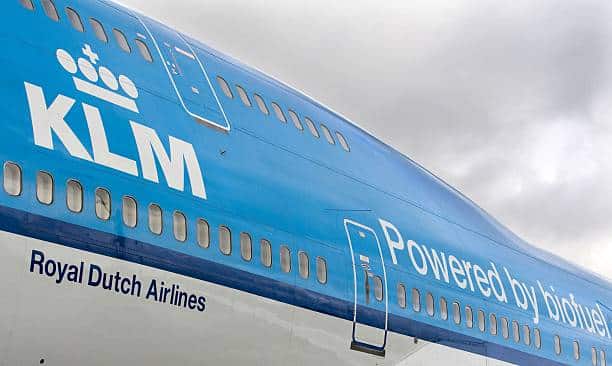
KLM fully endorses the report’s conclusions about the crucial importance of aviation to safeguarding prosperity and maintaining the Netherlands’ innovative ecosystem.
The airline said: “Aviation and Schiphol are crucial to our economic strength: they connect the Netherlands to the world and are essential for trade, employment and our international competitiveness. It is therefore vital that we invest collectively in a future-proof aviation sector rather than restrict it or impose additional national charges. Doing so would undermine the Netherlands’ competitive position and the global connectivity on which our prosperity depends.
“KLM is investing significantly in cleaner, quieter and more fuel-efficient operations. Alongside fleet renewal, SAF is currently one of the most effective means of reducing aviation CO₂ emissions, cutting emissions by at least 65% across its entire lifecycle compared with fossil kerosene. KLM blends more SAF each year than required under the European mandate and has entered into a long-term offtake agreement to support the development of the Netherlands’ first dedicated SAF production facility in Delfzijl. However, to achieve the joint ambition of a 14% SAF blend in the Netherlands by 2030, alternative fuels must become more affordable and widely available. Just as with wind and solar energy, government investment can make a real difference in securing the future of sustainable aviation.”
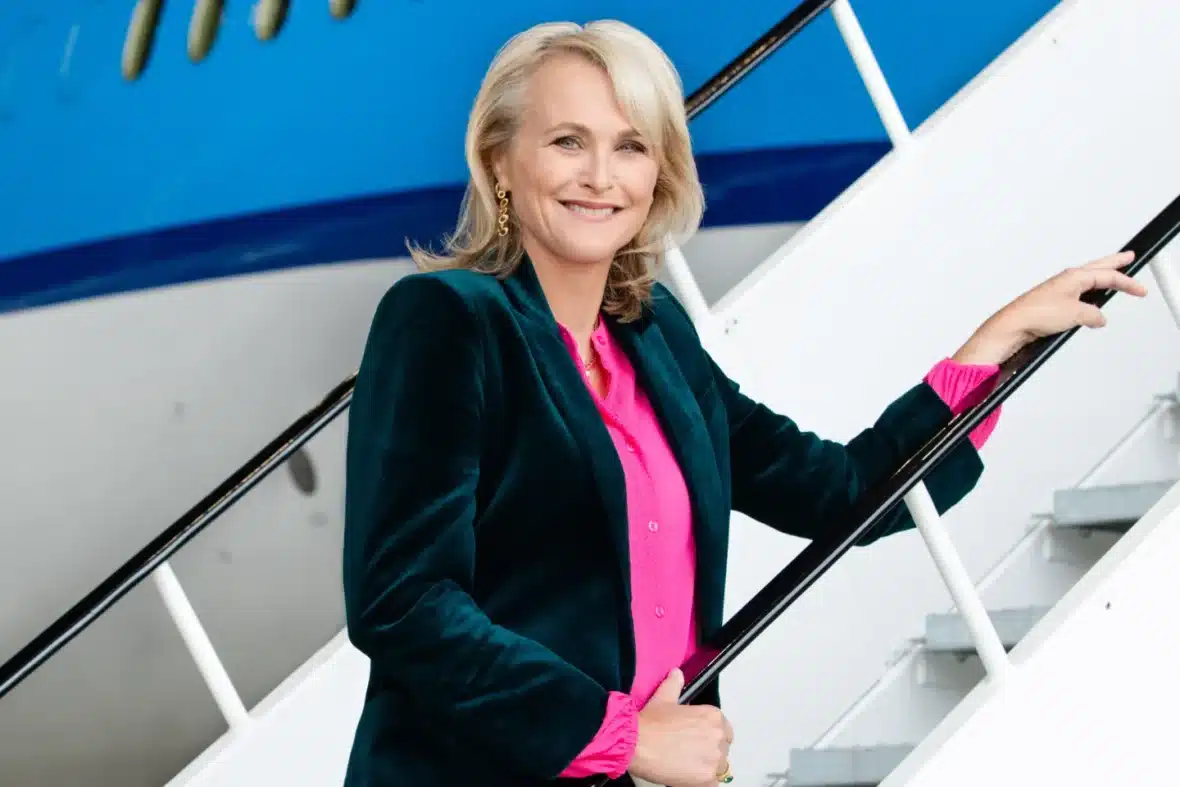
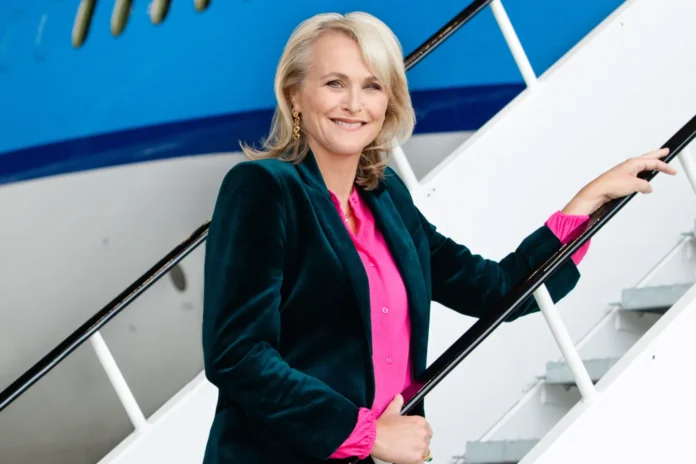
Marjan Rintel, CEO KLM, said: “We fully support the Wennink report’s conclusion that aviation is vital to the Netherlands’ future prosperity. To maintain that position and accelerate our sustainability efforts, the government must invest rather than introduce additional national charges. A national SAF fund would allow government and industry to work together to drive change. KLM is already investing in alternative fuels, but only with an active government role can we achieve the necessary scale and affordability. Now is the moment to position the Netherlands as a leader in sustainable aviation.”
A national SAF fund: paving the way for ‘SAF Made in Holland’
The creation of a national SAF fund aligns with European efforts to accelerate the transition to sustainable fuels, including the Sustainable Transport Investment Plan (STIP), and would make ‘SAF Made in Holland’ a reality. In KLM’s view, a national SAF fund should focus on the following:
1. Making SAF affordable for airlines
Bridge the price gap between SAF and fossil kerosene through an incentive fund, enabling airlines to actually use SAF and encouraging them to choose sustainable options. Based on current prices, an annual investment of €60 million could already deliver an additional 1% SAF blend.
2. Accelerating production and access to raw materials
Improve access to sustainable raw materials for SAF production and remove barriers to accelerated SAF infrastructure development. This would allow the Netherlands to make significant progress in scaling up domestic production.
3. Investing in (e)SAF innovation to become a European leader
Support the development of next-generation (e)SAF technologies and take a leading role in European innovation initiatives. The Dutch government has already taken a promising first step by joining a European pilot within the STIP programme.
The national SAF fund could be financed through the revenues from the existing Dutch aviation tax. This would allow the Netherlands, and Dutch aviation, to take the lead in scaling up alternative aviation fuels and help ensure that the national ambition of a 14% SAF blend by 2030 remains within reach.