

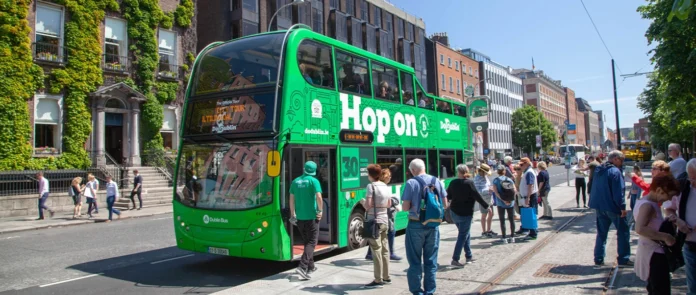
Ireland’s inbound and domestic tourism industry is expected to grow by between 5% and 7% this year, in revenue terms, despite 2025 being a relatively poor performing year.
The latest annual outlook from the Irish Tourism Industry Confederation (ITIC) is optimistic, but wholly dependent on a number of issues: a stable global economy and increased air access to Ireland; and a raft of pro-tourism and pro-enterprise policies from the Government, including the lifting of the Dublin Airport passenger cap, further support for regional airports, appropriate investment in the country’s broad tourism offering, cost mitigation measures and the alleviation of capacity blockages.
Latest figures from the Central Statistics Office (CSO) confirm the decline in 2025, with data up to the end of November showing a 5%, year-on-year, drop in visitor numbers to just above 6.2 million people.
Only the North American markets of the US and Canada showed an increase in yearly visitor numbers to Ireland and the total 2025 figure, when it arrives in the coming months, is expected to show a decline of 6%, for 2025, in overseas visitor numbers.
However, taking November on its own, the month showed a recovery – with a year-on-year jump in visitor numbers of 13%, to 460,300 and a 12% increase in the length of stay for visitors and a 10% jump in tourist spend, to €347m.
So, why the optimisim?
Well, wider industry data sources suggest a less alarming picture with airport numbers up, major visitor attractions performing solidly, and Dublin hotel occupancy up 1.5%. This picture is supported by Fáilte Ireland business surveys throughout the year.
It should also be noted that international forecasters, Tourism Economics, predict that inbound travel to Northern Europe (the region including Ireland) is set to grow 4.7% in 2026.

In its end of year review and 2026 forecast, ITIC said: “2025 has come and gone and the Irish tourism industry, as ever, showed its resilience and durability. The sector now employs 226,800 people right across the country and is by far the largest indigenous sectoral employer in regional Ireland. Industry chiefs remain concerned of a growing over-dependence on US visitors and, as welcome as the greenback is, there is an acceptance that Irish tourism needs to market diversify. Stronger European and Asian markets are important for Irish tourism in case of US economic volatility. Tourism agencies and industry partners are devising a market-diversification strategy and Government need to adequately fund it.
“It is hoped that 2026 can see growth in tourism revenue, both domestic and international, and that some of the data gaps apparent in official statistics can be plugged with the State adopting new intelligence sources to bolster policy decisions. Costs of business will continue to put pressure on business but hopefully demand stays solid while the capacity constraints at home are addressed. New registered accommodation stock should be incentivised, a fair regulation of tourism short term rentals needs to be devised, infrastructural delivery from internal connectivity to EV charging points has to be expedited, and the passenger cap at Ireland’s main gateway must be lifted to allow for capex development to commence without delay.
“No matter the global uncertainty, Irish tourism can’t be outsourced and offshored. It is here to stay and needs to be supported.”