


Ireland’s inbound tourism industry risks developing an over-reliance on US visitors and must diversify its portfolio of source markets, the Irish Tourism Industry Confederation (ITIC) has warned.
In a detailed report on the industry, ITIC said the growth being seen in US visitor numbers is welcome and the US market will always be of huge importance; but stressed Irish tourism’s dependence on the US market is becoming “increasingly pronounced”.
Over the course of a challenging year for inbound tourism, a bright spot has been the numbers visiting from the US – up 4% in the year-to-date. But, with the growth comes a warning.
“As welcome as growth in US business is, it also poses a risk of over-concentration,” ITIC warned.

In its report, ITIC said: “The US has been the star performer of Irish tourism, with 32% of all annual revenue coming courtesy of American expenditure. It has grown significantly in recent times and as welcome as this is, it does pose a challenge of over-concentration. A modest dip in US visitor numbers would have a painful impact on Irish tourism and would require significant growth elsewhere to compensate.
“In a world of such macroeconomic and geopolitical uncertainty there is significant risk for any industry to be too dependent on a single source market.
“ITIC calls for the US market to be strengthened but also calls for a sensible and prudent market diversification strategy. Funding is required to stimulate demand from European and long haul markets, air access must be incentivised, and capacity blockages on the ground must be alleviated.”
There are clear reasons why US visitors should be cherished and welcomed. More than 1.2 million US tourists visited Ireland last year- contributing almost €2bn to the economy. They stay longer here, than those from other countries, and spend more money while here; and the growth in their numbers is expected to continue in the near-term.
The way ITIC succinctly describes it – based on visitor spending patterns – is that one American visitor in Ireland is worth nearly 2 from the EU, or 3 from the UK.
“The US is clearly the best performing market for Irish tourism and has been in recent years. It represents a sizeable chunk of the Irish visitor economy in absolute terms as well as in relative terms too.”
US visitors are attracted here by a number of factors: heritage, connectivity and ease of access, service and value for money.
“Research shows that an Irish holiday continues to represent good value for money for US visitors. This has been helped up to recently by favourable exchange rates. It is true that there are cheaper destinations in Europe that Americans can opt to visit, but when it comes to value for money international travel is influenced not just by price but by exchange rates,” ITIC points out.
So, if everything is ticking along nicely, why the nervousness about US visitor numbers? Well, three letters: TTE: Trump, Tariffs and the Economy, basically.
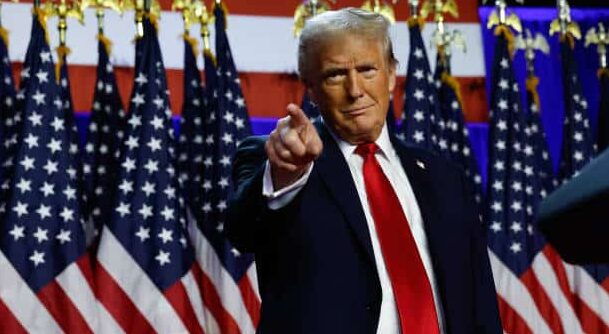
The dollar-euro exchange rate has been favourable for US holidaymakers, in recent years, but that has changed in recent times due to economic uncertainty and actions taken by the Trump administration.
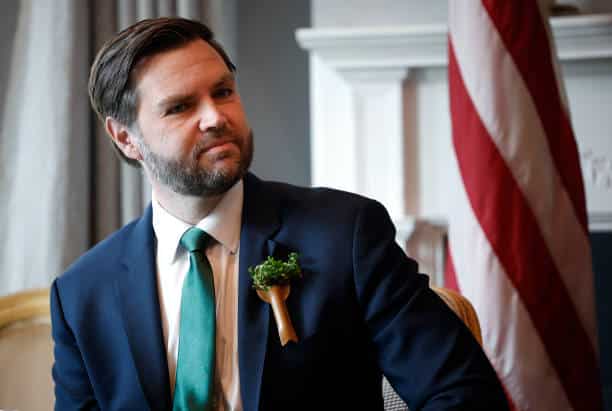
As ITIC explains: “President Trump’s ‘America First’ policy explicitly aims to see the US importing less and exporting more. As well as discouraging imports by imposing tariffs it is possible to shift the balance of trade by influencing the value of a country’s currency – if it loses value then its exports become cheaper in relative terms while imports get more expensive.
“Some commentators believe that President Trump’s eagerness to see the Federal Reserve lower base rates is in part due to the fact that this would put downward pressure on the dollar.
“Perceived political interference has traditionally led to economic instability. The risk of nudging the value of the US dollar down risks causing a much steeper loss in value – not just bad for the US economy but for the wider global economy too including Irish tourism.”
And, tariffs?…
“The US-EU trade agreement signed in July means that the majority of European goods face a 15% tariff on entry to the States. It raises the question as to whether tariffs really impact outbound tourism from the US? Perhaps their immediate effect is negligible, but it should be kept in mind that airlines make a significantly higher profit per business passenger than they do per leisure passenger.
“Last year nearly 1 in 10 visits to Ireland from North America were for business reasons. If tariffs reduce the amount of trade – as economists predict – it could lead to less business travel. Less business travel result in airlines finding it tougher to make money potentially leading to trimmed route networks, flight frequencies, or opting to offer fewer seats at a discounted price to leisure travellers.
“Changes to US import rules also extend to vacationing Americans as there is now a need to pay a tariff on items purchased while engaged in personal travel valued at more than $200 when returning to the US.”
ITIC also points, in its report, to Eurostat (the EU’s statistics agency) figures showing Ireland is far more dependent on US visitors than other EU nations. The level of foreign visitor nights attributable to US tourists is 31% and rising in Ireland; while the EU average is just 6%.
“This situation underscores the need to ensure that Ireland is alert to emerging opportunities from other source markets, not just those across Europe, but Asia too,” ITIC said.
“While outbound travel to Europe from China remains considerably lower than before the pandemic the market from India has seen a far swifter rebound, with Britain welcoming more than 600,000 visits from India last year, versus 460,000 from China.”
Next year could amply illustrate the importance of the US visitor to Ireland’s inbound tourism offering. A drop in visitor numbers is widely expected for a number of reasons. Uncertainty in the US economy is one potential reason; but also needing to be factored in is the USA’s joint host nation status of the 2026 FIFA World Cup and the not insignificant matter of 2026 being the 250th anniversary of the USA itself; something which is likely to see most Americans holiday at home.


Ireland could suffer a near €200m shortfall in tourist spend if other countries don’t up their visits.
According to ITIC: “A 10% decline in visits from the US would equate to 124,000 fewer US visitors and a reduction in visitor expenditure of close to €191m.
“If other markets were expected to compensate for such a decline how many additional visitors would Ireland need to be attracting? Well, if European markets excluding Great Britain are to replace 124,000 fewer American visitors no fewer than 216,000 more European visitors are needed, while if Ireland looks just to travel from Britain to make up the slack the requirement would be for an uplift of 375,000 arrivals.
“Such growth in arrivals from Europe or Great Britain would be a stretch, which further underscores the importance of developing a broader range of long-haul source markets from the likes of Asia, with a tendency to stay longer and spend more per night than is true for short-haul source markets.”
So, in a nutshell, ITIC still views the US market as being of significant importance to Ireland, but it’s one that cannot be taken for granted and now is the time to engage on other source markets.
ITIC said: “As this bulletin outlines, the US market is critically important to Irish tourism and has become more so in recent times. But such strength poses a potential weakness. With tariffs, a vulnerable dollar and economic uncertainty in the States, visitor flows from the US may be exposed into the future. Transatlantic air access may be stronger than ever and set to grow next year but it is only prudent for Irish tourism to develop new business channels as well as fortify old ones.
“ITIC welcomes the market diversification strategy being developed by tourism agencies and urges the Government to properly fund it. Irish tourism is valued at over €12bn when accounting for domestic earnings, overseas tourism and fares paid to carriers. It is a significant contributor to the exchequer with Fáilte Ireland data showing that 29c of every €1 is returned to the exchequer in tourism-related taxes. Tourism and hospitality enterprises are navigating their way through a challenging period with elevated costs of business squeezing profit margins. The reduction in the food services VAT rate to 9% in Budget 2026 has been welcomed but investment in tourism was only modest and needs to be ramped up if the sector is to attract new markets, Equally capacity constraints need to be addressed including the passenger cap at Dublin Airport and the shortage of tourism accommodation.
“Tourism is too important to Ireland to take for granted. ITIC hopes that the new tourism policy from Government is ambitious whilst also dealing with demand and supply pressures to ensure that the sector can thrive in coming years.”