

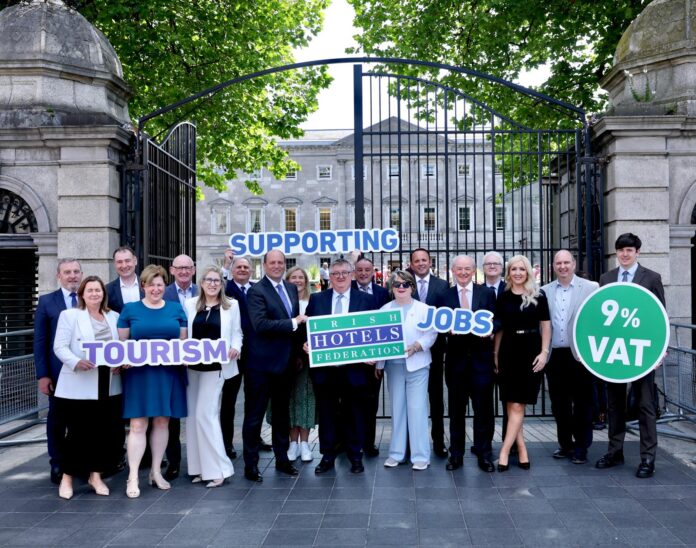
Hoteliers from across the country have met with TDs and Senators in Dublin to discuss the key challenges facing Irish tourism and the necessary steps required to ensure the successful long-term development of Ireland’s largest indigenous industry, supporting over 270,000 livelihoods.
In the run-up to Budget 2026, a key concern for hotels and guesthouses is the exceptionally high operating costs that tourism and hospitality businesses are grappling with, a situation that is particularly challenging for regional businesses that are heavily reliant on food services.
Michael Magner, President of the Irish Hotels Federation said: “Tourism businesses are struggling to deal with ever-increasing operating costs and tighter margins. It is now essential that the Government tackles this head on and delivers targeted measures to enhance cost competitiveness and support business viability.”
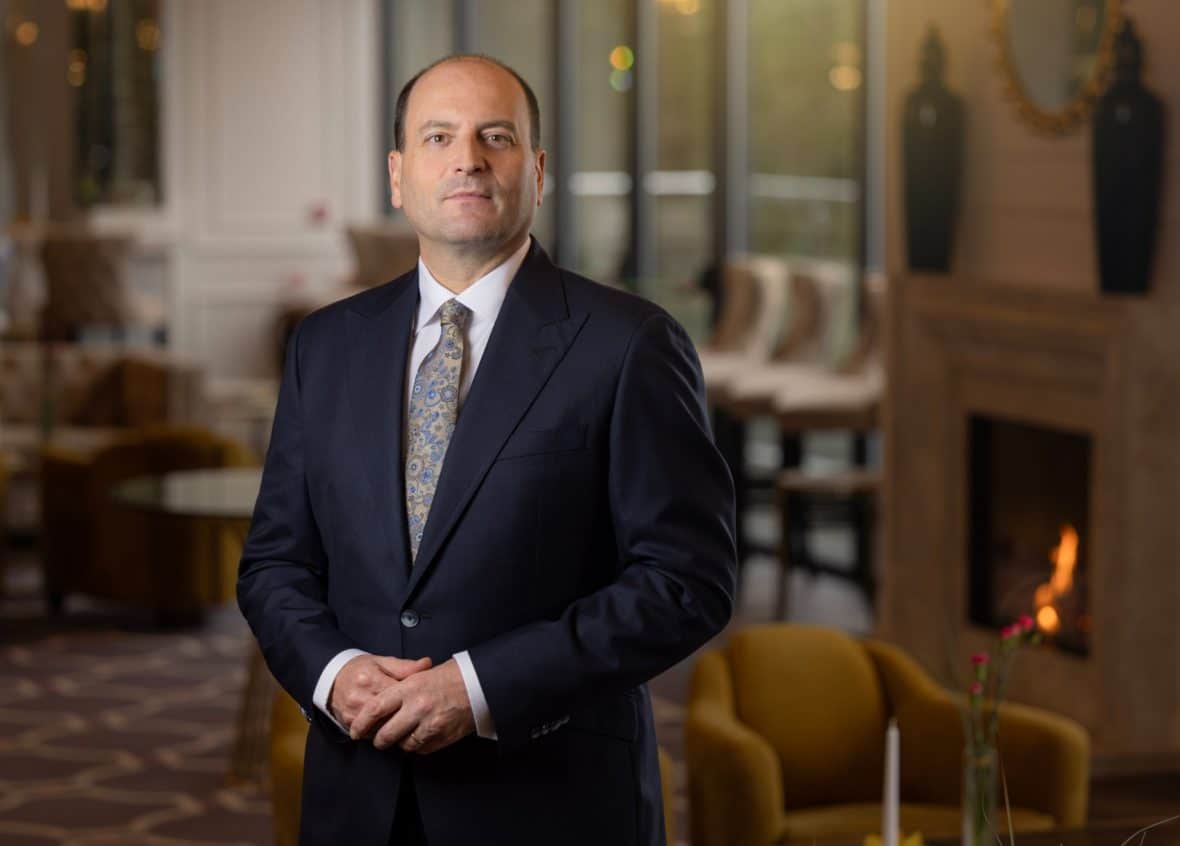
“This is at a time when Irish tourism is experiencing difficult headwinds on a number of fronts, including reduced tourism expenditure, economic challenges across our key source markets and increased political uncertainty internationally – all of which pose a serious risk to our industry.”
Mr Magner also noted recent research by Fáilte Ireland, showing 51% of tourism businesses have seen a decrease in revenues to date in 2025 compared with last year. Results indicate that overseas visitor spend, which typically accounts for 70% of tourism revenue, is a significant concern. This is particularly challenging for ‘Food & Drink’ businesses, with 75% reporting a drop in overseas revenue so far this year.
Outlining the key policy priorities for the industry, Mr Magner stressed the importance of decisive action in the upcoming Budget:
Key policy priorities for Budget 2026
- A permanent restoration of the 9% VAT rate on hospitality food services. This is key to supporting the viability of our tourism food offering.
- A meaningful reduction in Employers’ PRSI for labour-intensive indigenous industries such as tourism and hospitality.
- Measures to tackle excessive business costs, which are amongst the highest in Europe, including insurance premiums and energy pass through charges.
- Increased investment in training, skills and development, leveraging the enormous un-tapped surpluses in the National Training Fund.
- Measures to support enhanced air access for Dublin and our regional airports.
- Increased funding for Fáilte Ireland and Tourism Ireland to support sectoral growth, marketing and development.
- More targeted measures to support sustainability initiatives within our sector in line with Ireland’s national climate action goals.
Having these measures in place would go a long way towards ensuring the long-term success of Ireland’s tourism and hospitality industry, the IHF said.
Tourism at a Glance
As Ireland’s largest indigenous employer, a vibrant and thriving tourism and hospitality industry is vital for the country’s economic well-being:
- 270,000 livelihoods supported by Irish tourism & hospitality
- 69,000 people directly employed by Irish hotels & guesthouses
- Regional employment – some 70% of tourism & hospitality jobs are outside of Dublin
- €10bn in revenue generated by tourism annually for the economy
- Over €2.9bn in taxes generated annually for the State by tourism-related activity