


IHG Hotels & Resorts – the hotel giant which owns the likes of InterContinental, Holiday Inn, Voco, Crowne Plaza, Ruby and Iberostar – has said it has seen RevPAR growth across its global operations in the year to date.
RevPAR – or revenue per available room – is a key growth metric for the hotel industry and IHG said it saw 1.4% global growth, year-on-year, over the first nine months of 2025.
While up around the world, RevPAR growth was most pronounced across Europe, the Middle East, Africa and Asia.
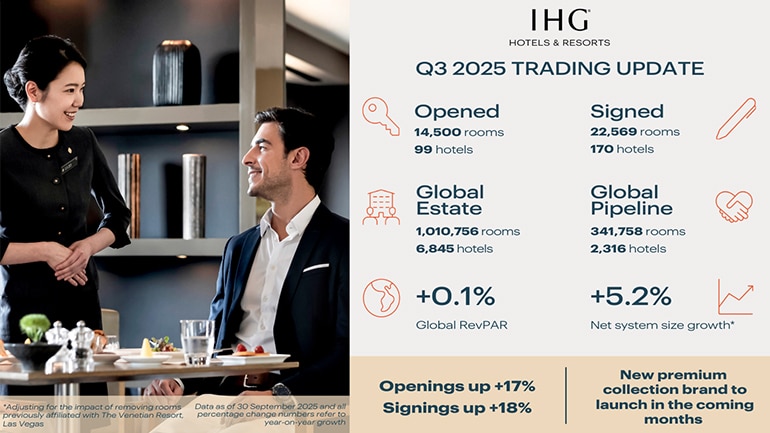
In its latest trading update, IHG said it opened 14,500 rooms – across 99 hotels – in the third quarter of this year and has a global pipeline of 342,000 rooms across 2,316 hotels.
Elie Maalouf, IHG Hotels & Resorts Chief Executive, said: “We are pleased with our performance and the continued growth of our brands to date in 2025, and we remain on track to meet full year consensus profit and earnings expectations. As anticipated, RevPAR growth in Q3 was similar to the prior quarter, with another strong performance in EMEAA and further improvement in Greater China, though the US continued to see slower trading conditions. Overall, we continue to benefit from the power of our globally diverse footprint.
“Growing demand for our world class brands continues, with 2025 set to be one of our biggest ever years for both openings and signings. We opened 14.5k rooms across 99 hotels in the quarter, up +17% year-on-year excluding the NOVUM conversions this year and last, and we signed 22.6k rooms across 170 properties, up +18%, with great progress in all three regions. Recognising strong guest and owner interest in the large and fast-growing premium segment, we are excited to announce we will be bringing a new collection brand to market in the coming months, positioned in upscale to upper upscale. This will build on the well-established successes we’ve already delivered with our other collection and conversion brands – Vignette, voco and Garner.
“Long-term structural drivers of both travel demand and supply remain compelling, and while near-term macro-economic challenges persist in some markets, others are showing improvement or sustained growth.”