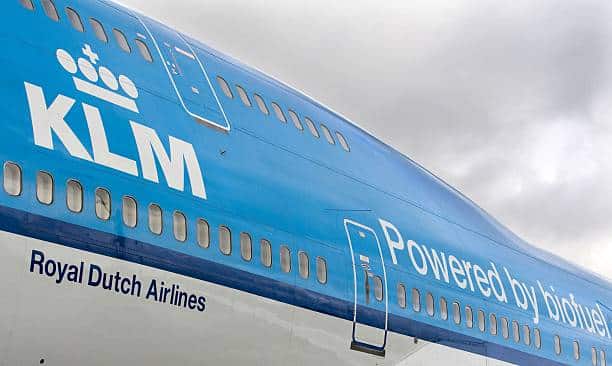

The boss of KLM has warned the Dutch Government it is pricing its airports out of the market – with its flight tax policy – and pushing the country’s residents into using airports in Germany and Belgium instead.
Recent research – by local market research firm Marketeffect for KLM – shows that nearly 75% of Dutch people who fly increaseingly consider departing from Belgium or Germany when air fares rise due to increases in the Dutch flight tax.
A further increase in the flight tax, as announced in the Netherlands’ 2026 budget, last week, with a projected revenue of around €1.1bn per year from 2027 onward, will make flying from the Netherlands unaffordable for many Dutch travellers, KLM has claimed.
A family with two children already pays €120 in flight tax per trip. In Belgium, the maximum flight tax per ticket is €10, Sweden is abolishing its flight tax, and Germany is even considering reversing its recent increase. Soon, a Dutch family of four will pay €200 in flight tax for a flight to Greece or Türkiye.
As a result, travellers are turning to airports across the border in Belgium or Germany, where the tax burden is lower.
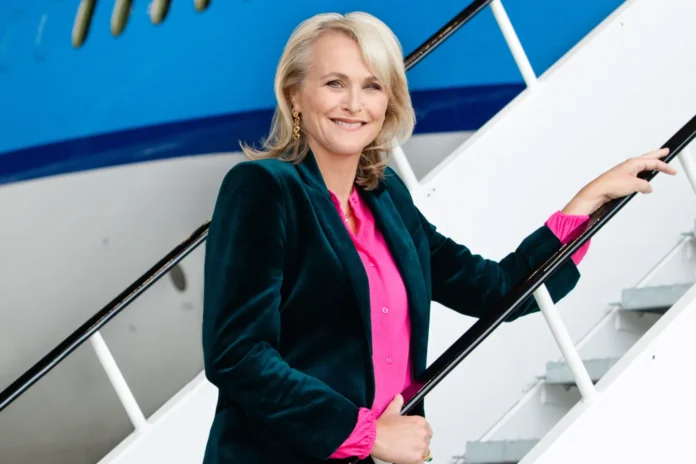
KLM CEO Marjan Rintel said: “We see that passengers want to keep flying, but they are very price-sensitive. Since the introduction of the flight tax in 2021, the share of Dutch travellers flying from Düsseldorf and Brussels has already increased by 41% and 20%, respectively, between 2019 and 2024. Further increases in ticket prices—whether due to higher flight taxes or increased airport fees—will only accelerate the shift of travellers to airports abroad, such as Brussels and Düsseldorf.”

Ms Rintel added: “This flight tax makes the Netherlands the most expensive country in the European Union for air travel, no matter the distance. As a result, even more Dutch travellers are choosing to drive across the border to fly from airports in neighbouring countries. This doesn’t help the climate—in fact, it actually undermines our ability to continue investing in cleaner and quieter aviation. The Netherlands is pricing itself out of the market. This puts pressure on our airline network and strikes at the heart of the Netherlands’ global connectivity.”
Currently, the proceeds from the flight tax go back into the Dutch national treasury and are not invested in making aviation more sustainable, such as by scaling up and making alternative fuels (SAF) more affordable. This is at odds with the wishes of nearly nine out of ten Dutch people, who believe the tax revenue should be used specifically to make flying more sustainable.
KLM is, therefore, advocating for a different approach.
Marjan Rintel said: “We should not keep piling on new taxes and extra costs here in the Netherlands. Instead, we need to invest together in cleaner aviation, for example by supporting alternative fuels (SAF). Right now, not a single cent of the tax revenue is going toward making aviation more sustainable. Families paying hundreds of euros in flight taxes should at least expect their money to actually contribute to lower emissions. Just as the government supports scaling up wind and solar energy or electrification of the vehicle fleet, it should also do more to make SAF production in the Netherlands available and affordable.”